S&P Global Ratings & 451 Research
September 16, 2021
Customer Experience Focus Can Improve Equity And Credit Performance
A first-of-its-kind study spanning nearly 10,000 global issuers finds that companies investing seriously in digital customer experience post materially higher equity returns — and meaningfully more stable credit ratings.
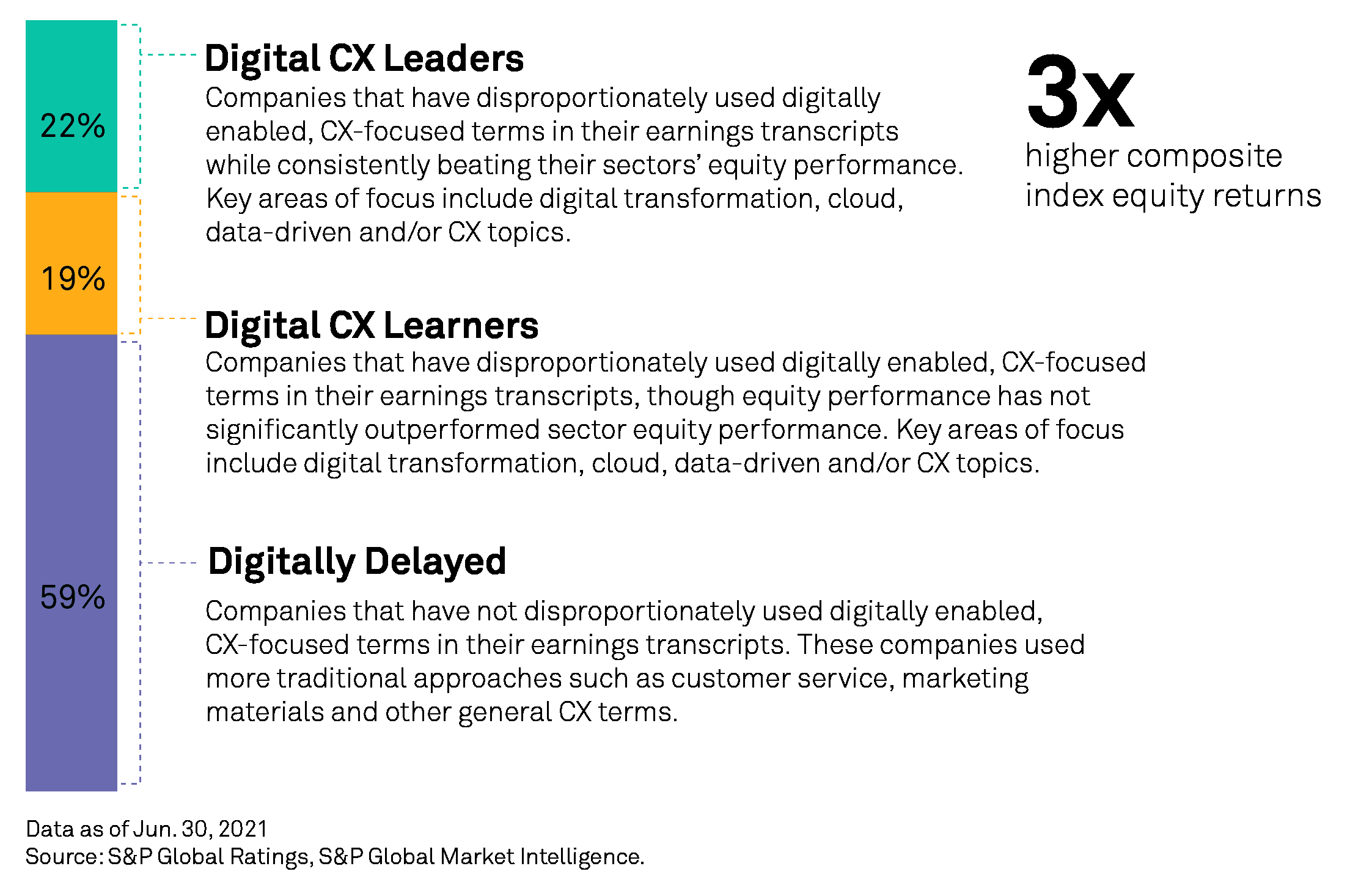
Business strategy on customer experience (CX) and digital transformation correlates to improved equity and reduced credit risk over time. Companies with formal digital transformation strategies and investments in related CX technologies — CX leaders and learners — post higher equity returns than their digitally delayed peers.
Key Takeaways
- Of all companies using digital CX terms in their earnings transcripts, CX leaders and CX learners have higher equity returns, using a composite index method, than their industry peers on average.
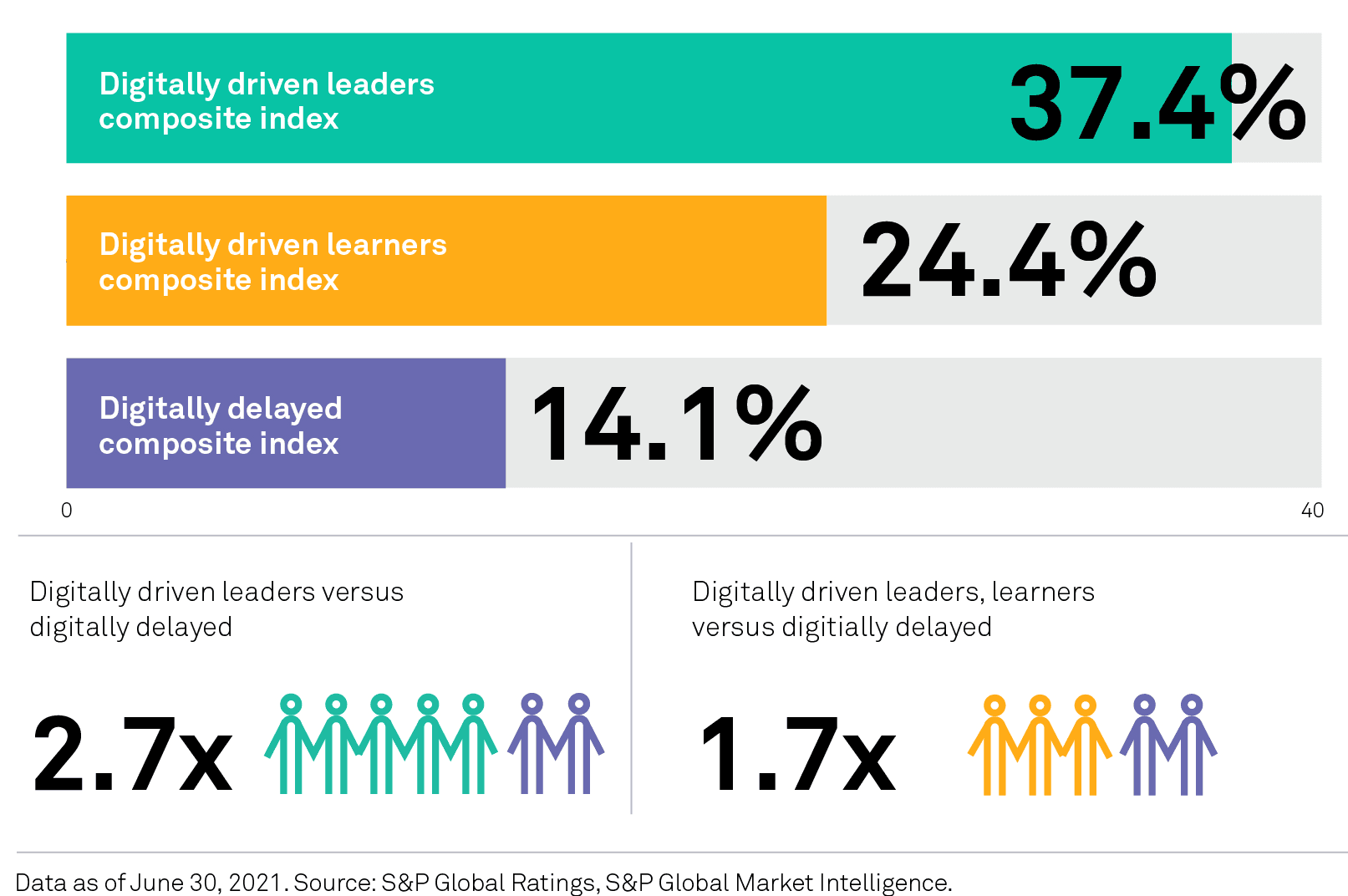
- The top 22% of digital CX leaders have 2.7× higher average equity returns than their digitally delayed peers, driven by frequent, consistent use of CX and service terms alongside digital transformation and machine learning terms.
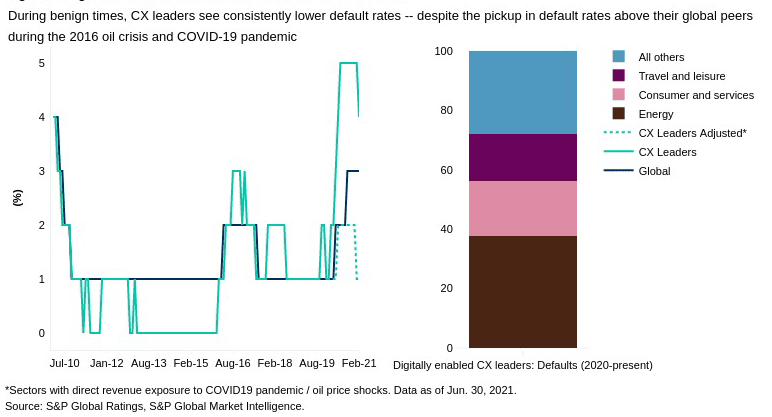
- Digital CX leaders generally see lower observed default rates during benign periods than the totality of global rated issuers. Of the two periods in the last decade that dispute this trend — 2016 and 2020 — oil and gas (2016 oil price crisis) and energy, brick-and-mortar retail, and travel (2020 pandemic) account for over three-quarters of defaults.
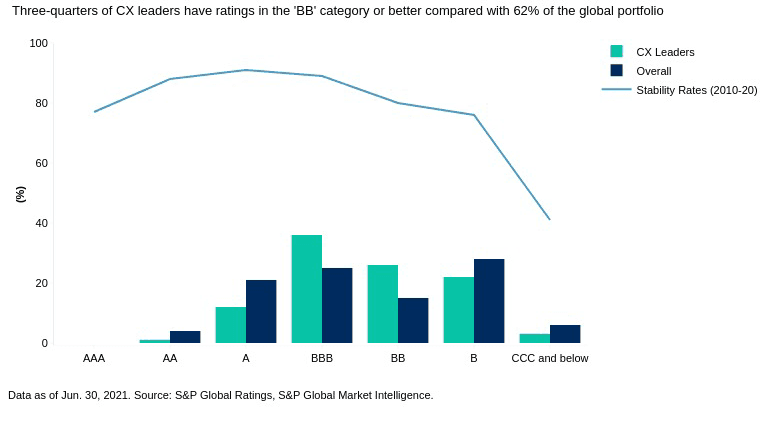
- While the global portfolio narrowly beats CX leaders on the share of investment-grade ratings (51% versus 49%), including the 'BB' category, three-quarters of CX leaders are rated 'BB' or higher, compared with 62% of their global peers.
- As companies invest more in technology, digital experiences for customers improve — benchmarking digital maturity is critical to business planning and growth.
Companies using digitization to focus on and adapt to customer needs have a clear advantage from the standpoint of investor appetite. CX leaders have a higher composite index equity return than their digitally delayed counterparts, and our data shows how CX focus and technology investment affect equity performance and creditworthiness across sectors.
Digital transformation is real, and it's happening: every business is becoming a digital business through innovative products, services, or business models; continuous improvement in business operations; and personalized experiences for customers, employees, and partners. This research is the first collaboration of its kind between S&P Global Ratings and 451 Research, a part of S&P Global Market Intelligence. We evaluated the credit ratings, market capitalization, and earnings transcripts of nearly 10,000 global issuers to identify three categories: digital CX leaders, digital CX learners, and digitally delayed companies.
CX Tech Investments Boost Equity And Credit Performance
We are witnessing a dramatic shift in the balance of power between organizations and their customers across virtually every industry. Price and product are no longer enough; customers value experience. Organizations can digitally transform by leveraging the latest applications, analytics, and infrastructure to provide a differentiated experience — not a luxury, but a necessity for survival.
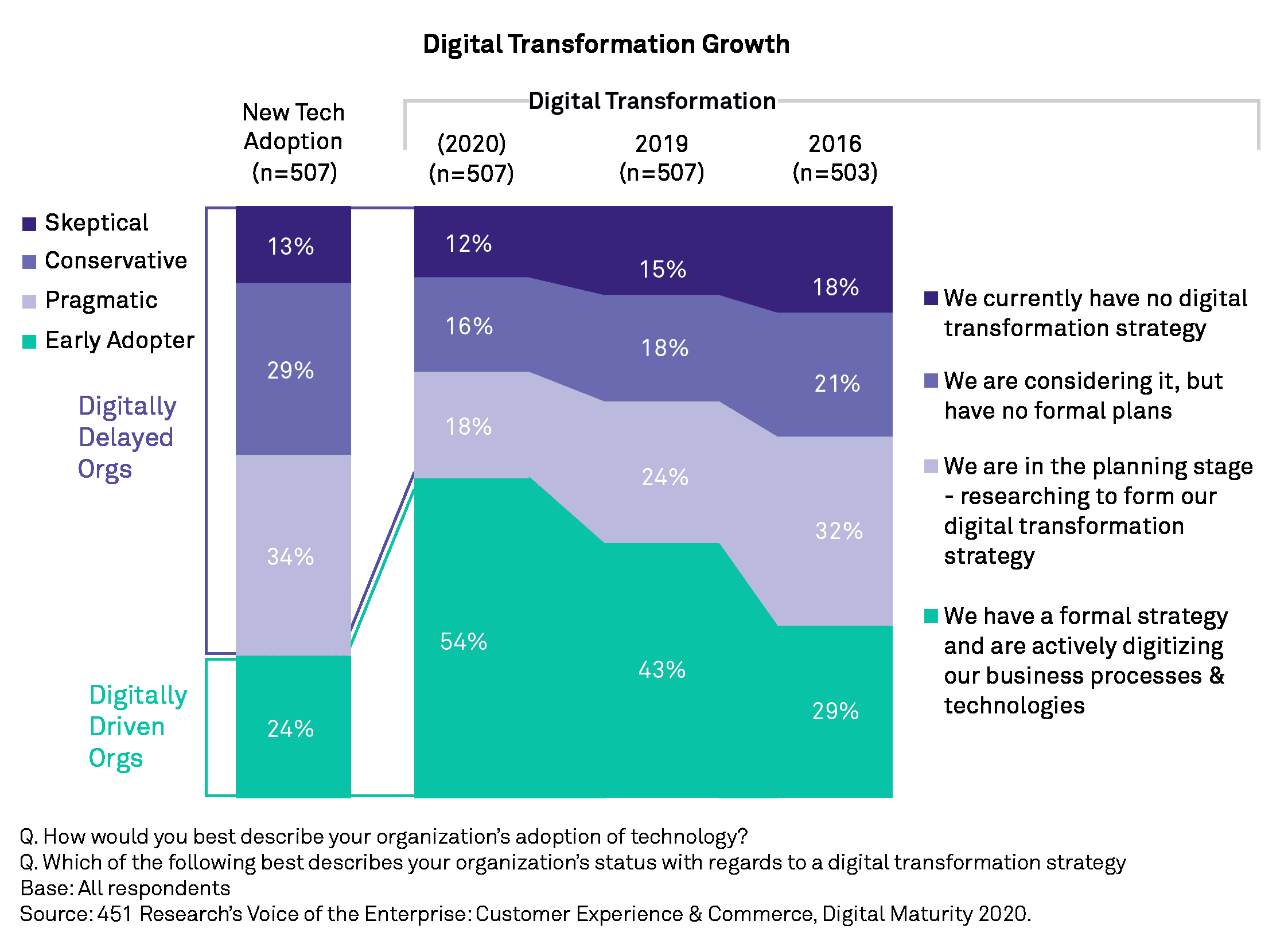
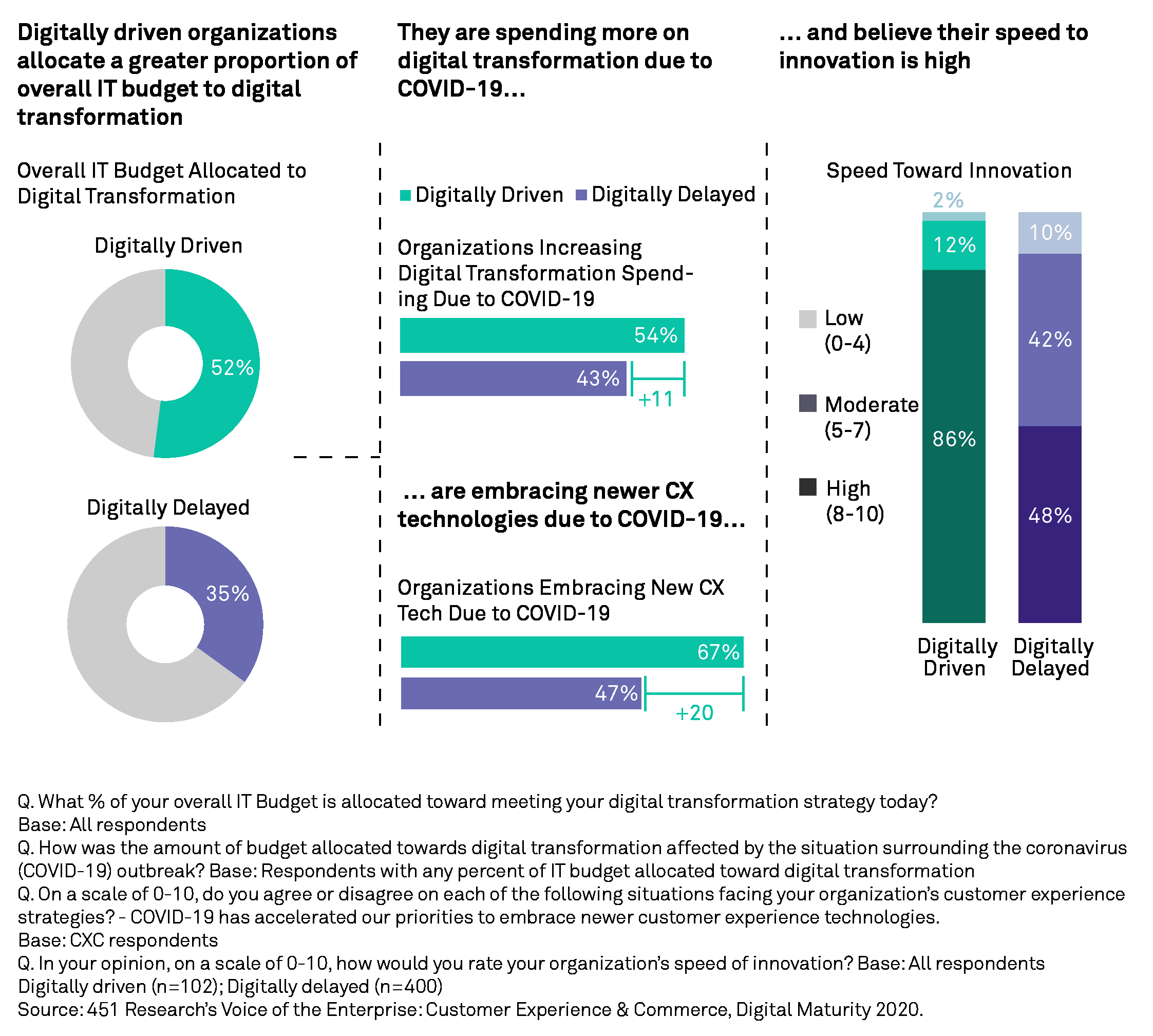
The power of a digital transformation strategy lies in executive leadership determining its vision and objectives. Formal strategies have accelerated over the past decade: a 2020 survey by 451 Research found 54% of businesses have formal strategies in place, up from 43% in 2019 and 29% in 2016, with 24% of businesses considering themselves early adopters of technology.
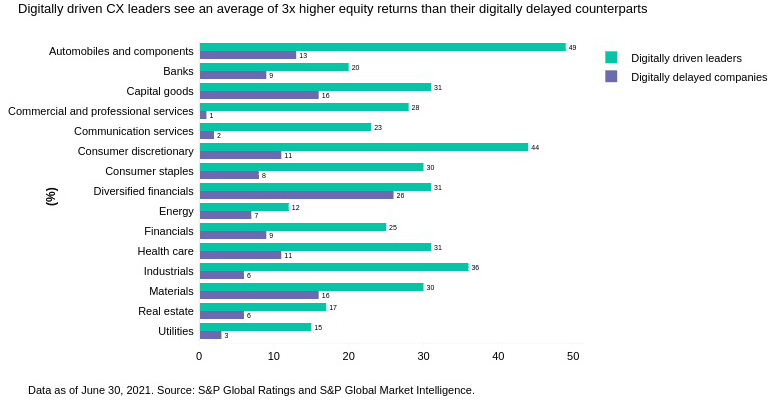
True Leaders Emerge: The Top Leaders Have Almost 3× Higher Equity Returns
A rising number of organizations are focusing on transforming their businesses to capitalize on long-term customer relationships that build brand loyalty. We find that this differentiation makes for radically different performance across digitally driven and digitally delayed groups when comparing composite index averages — and that leaders, making up just one-third of the $70 trillion market capitalization of globally rated public companies, disproportionately and consistently use CX, service, digital transformation, and machine learning terms.
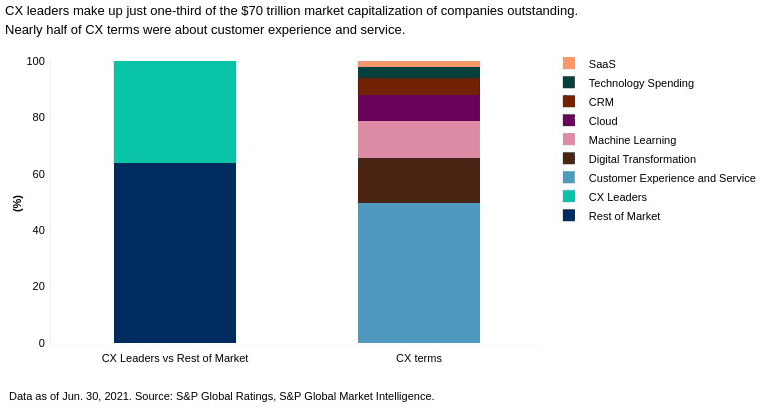
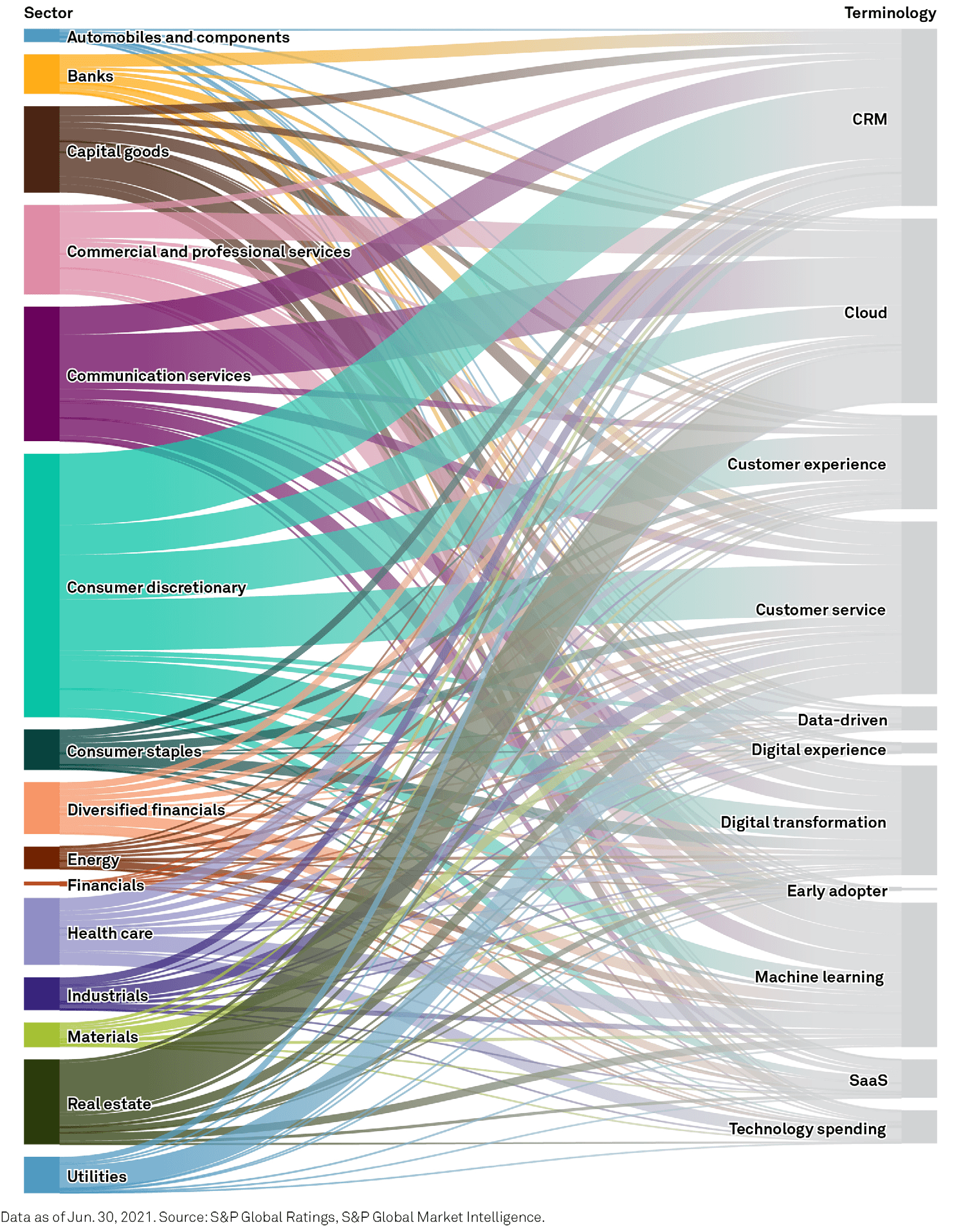
Consumer-facing sectors showed relatively sizable use of experiential terms — "digital experience," "digital transformation," "customer experience" — since demand in these sectors is more elastic than in durable, B2B, and less discretionary sectors, making CX adoption vital to remaining competitive. Beyond CX and service terms, the most common technology terms digital leaders used were "digital transformation," "cloud," and "machine learning" — underscoring that benchmarking digital maturity, including automation of customer-facing processes and modern cloud infrastructure, is critical to business planning and growth.
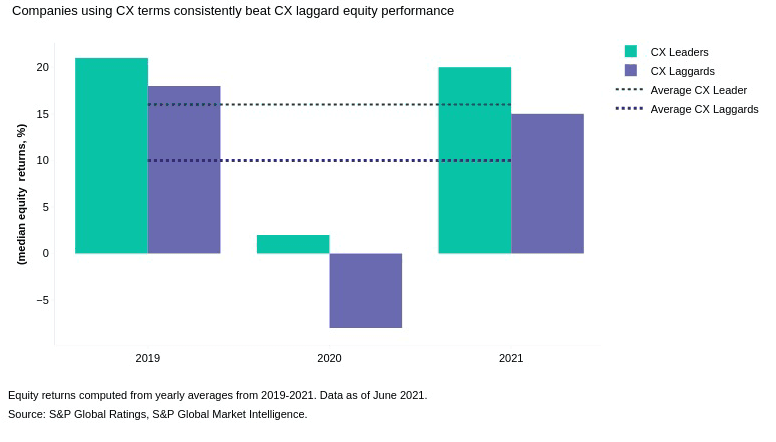
Digitally Driven CX Leaders Consistently Outperform On Median Equity Performance
Equity returns for digitally driven CX leaders were consistently higher over the last three years of the study period. Consistency can equate to stability, as leaders focus on long-term, customer-centric initiatives (outside-in metrics) versus cost reduction and operational performance (inside-out).
Digitally Driven Leaders Similarly Show Strong Creditworthiness
The fixed income asset class shows similar strength: CX leaders have more stable creditworthiness than the global portfolio overall. While the global portfolio narrowly beats CX leaders on the share of investment-grade ratings (51% versus 49%), three-quarters of CX leaders carry ratings of at least 'BB,' compared with 62% of their global peers. Over the past 10 years, stability rates — the absence of both upgrades and downgrades — are at least 80% for companies rated 'BB' and above, while 'B' and 'CCC' categories are markedly less stable; capital costs for fixed-income instruments are also significantly more attractive in the higher categories, with spreads trading well below 300 basis points compared with over 600 bps for 'CCC.' An investor holding a portfolio of CX leaders will carry significantly less credit risk than one holding the entire bond market — especially during market dislocation.
Why Are Digitally Driven CX Leaders Gaining A Competitive Edge?
The desire to capture and analyze new forms of data plays a powerful role in improving digital innovation. Human exploration augmented by intelligent guidance from machine learning is a powerful combination, and one of the greatest divides between digitally driven and digitally delayed companies — a 29-percentage-point differential as of Q4 2020 — is "using machine learning and AI to improve CX."
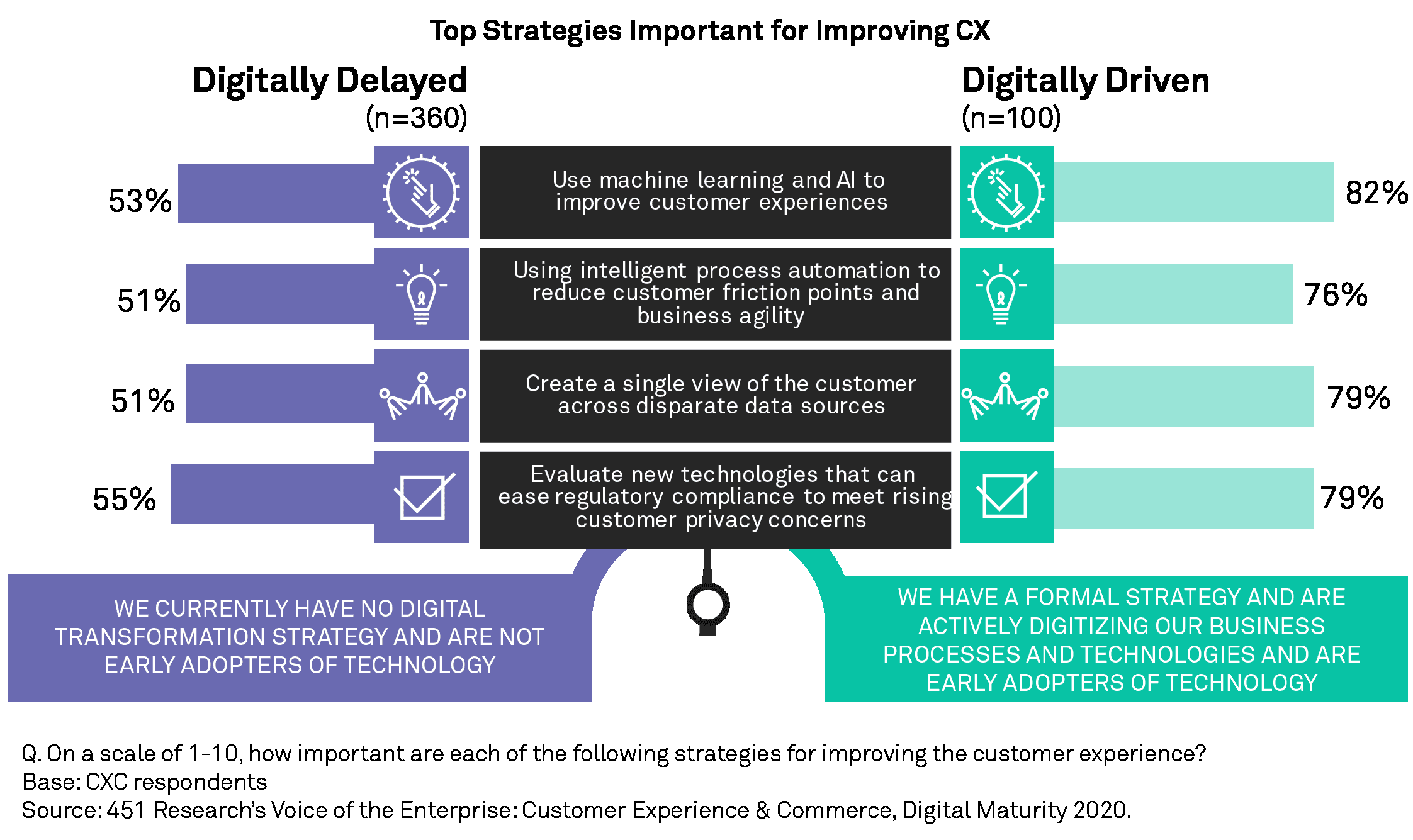
According to a 451 Research survey, nearly 69% of digital leaders had already deployed a customer relationship management (CRM) application, with another 27% considering redeployment. Digitally driven organizations are allocating a greater share of IT budget to digital transformation (52%), and 54% report spending more due to COVID-19 — an acceleration in newer CX technologies, with 67% of digitally driven companies adapting in response to new customer requirements.
Sector Performance Differentiation Creates A Different Class Of Leadership
Execution varies across sectors: the consumer discretionary sector produced the largest number of companies meeting our CX leader qualifications, with machine learning and CRM adoption most connected to capital goods, diversified financials, and consumer discretionary.
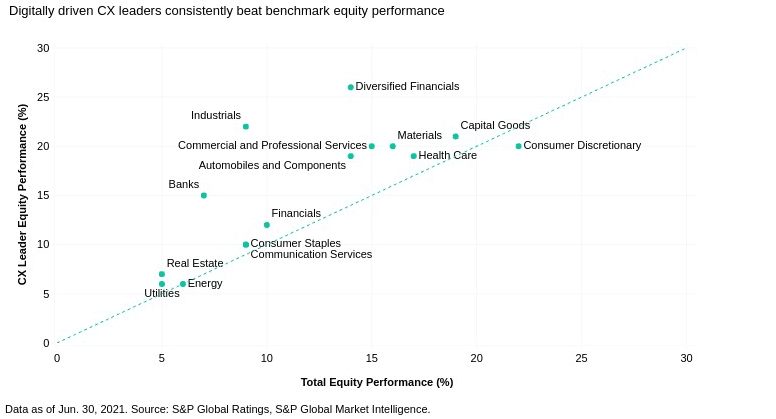
While leaders generally beat peers on year-over-year equity performance, sectors such as diversified financials, industrials, automobiles and components, commercial and professional services, and banks showed a larger disparity between digitally enabled leaders and digitally delayed peers; utilities, energy, real estate, communications services, and consumer staples showed a far less pronounced gap — a point of elasticity, where sectors most visibly rewarded by responsive changes in revenue, profitability, and retention saw the clearest equity effect. For less elastic sectors, CX strategy's impact shifts from equity returns toward revenue retention and credit risk mitigation instead.
Notable CX leaders and learners
In automotive, leaders and learners include Tesla, Winnebago Industries, Ford, and General Motors — Tesla in particular pairs a strong loyalty base with intelligent processes that personalize the experience down to the product itself. In financial services, one of the strongest sectors (62% embracing formal digital transformation strategies per 451 Research), Bank of America, Morgan Stanley, American Express, and U.S. Bancorp began digitization years back with projects spanning mortgage digitization, digital assistants, and employee-facing customer-feedback insight.
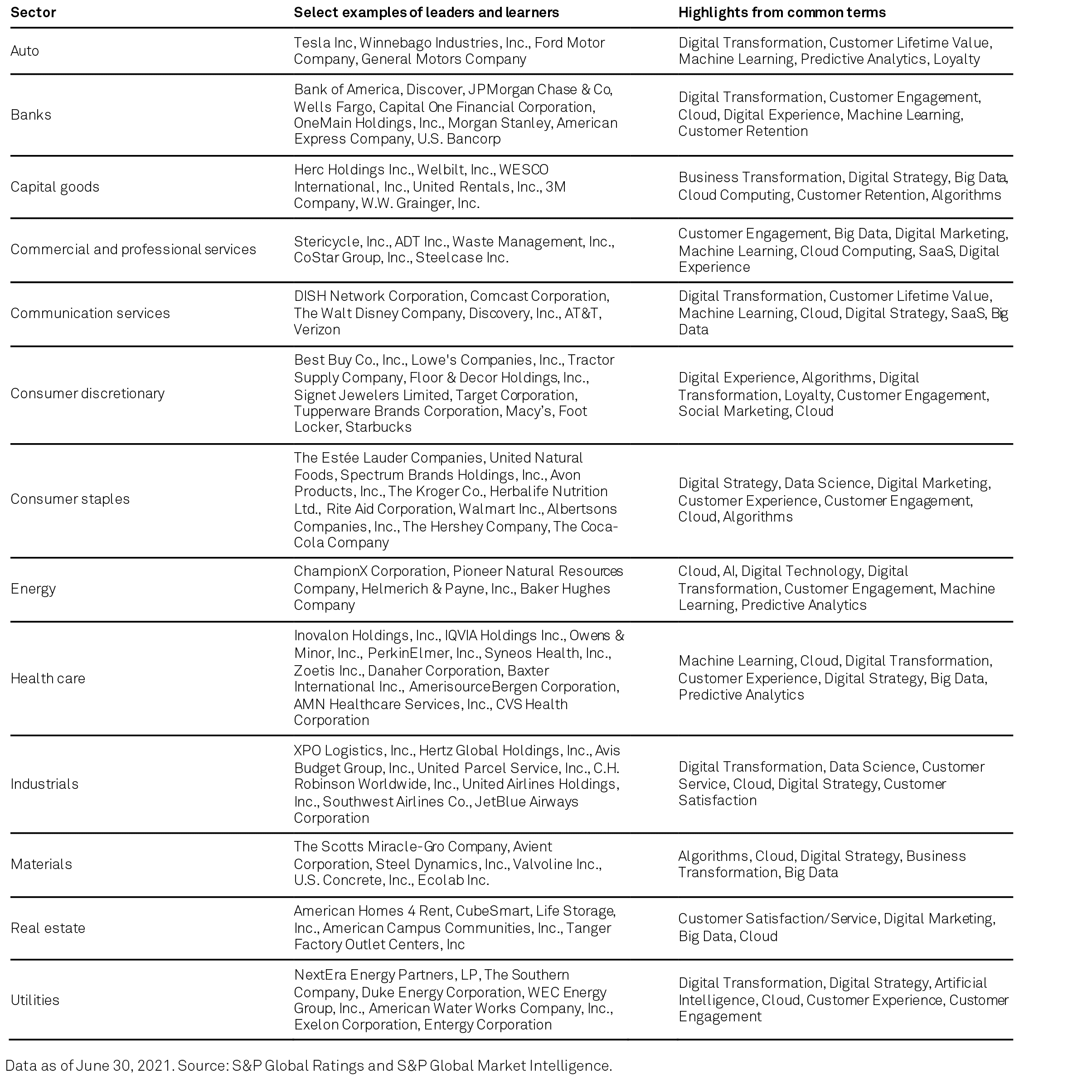
Even the capital goods market is embracing digital transformation: United Rentals provides a fully digital, 24/7 rental experience. Consumer discretionary is one of the largest categories of leaders — Best Buy began its transformation pre-pandemic, enabling omnichannel commerce ($66.5 billion in U.S. omnichannel sales alone in 2020). Brands including The Kroger Co., Avon, 3M, and Floor & Decor are transforming products and services around digital commerce and engagement, while Tractor Supply, The Scotts Miracle-Gro Co., and Valvoline accelerated e-commerce, cloud-based engagement, and first/third-party data usage respectively.
Digital Experience And Technology Spending Are Positively Correlated
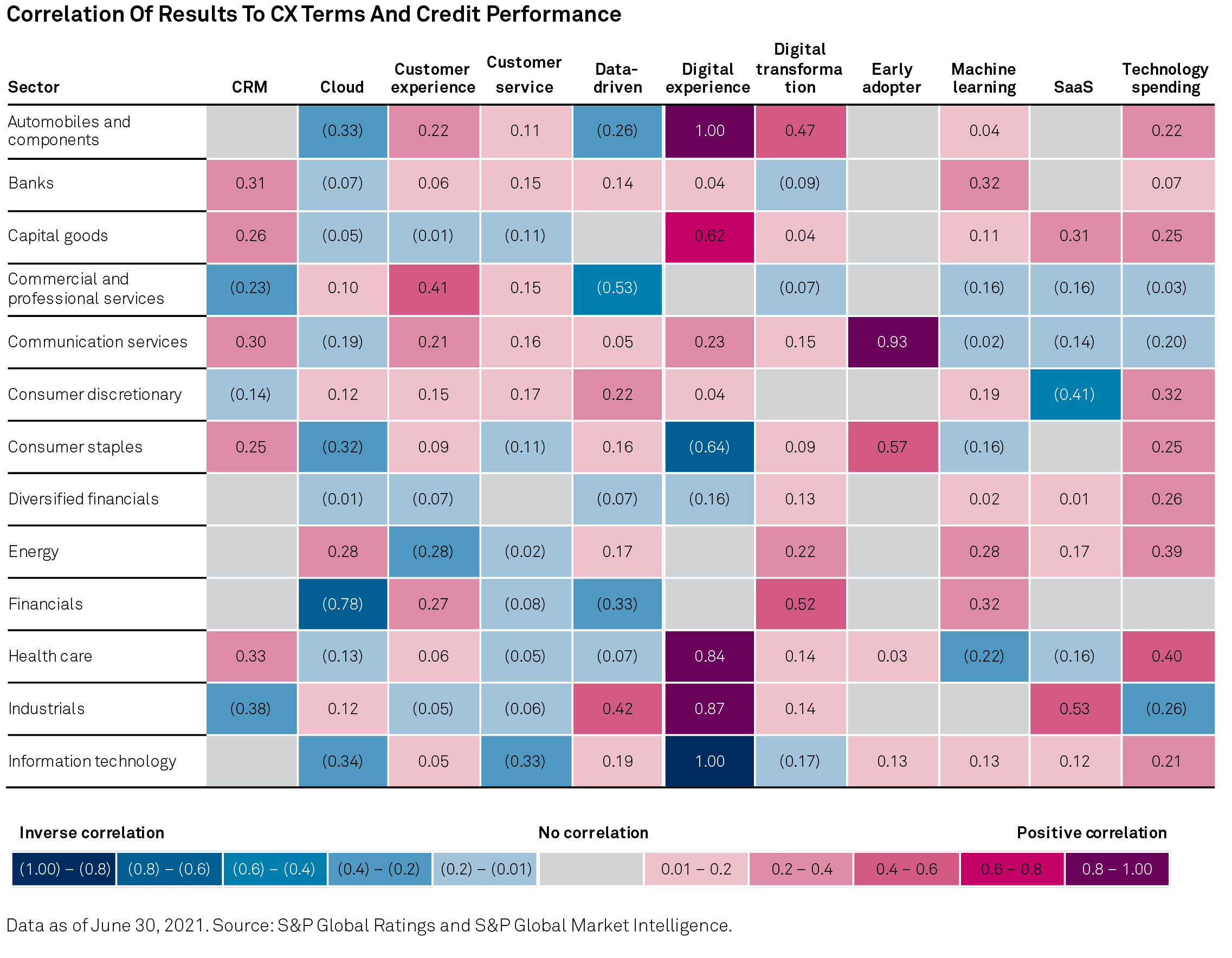
The correlation of digital CX terms varies by sector and direction. Cloud terms show a fairly inverse correlation with most sectors' credit performance — a higher correlation with lower ratings, which tend to carry higher leverage — while a positive correlation exists between technology spending and higher credit ratings, illustrating investment in the future that protects creditworthiness through sustained revenues.
Becoming data-driven entails an organizational and cultural shift: adoption of data-driven initiatives grew to 37% in 2020 from 25% in 2019. The share of digitally driven organizations with a formal data-driven strategy (71%) is now almost triple that of digitally delayed peers, and 63% of leaders say their business can create and deliver exceptional, real-time CX across the customer journey.
Conclusions And Implications
Businesses are doubling down on CX strategies, with a noticeable shift in dollars funneled into digital experiences. Innovations in cloud infrastructure, application architecture, and AI/machine learning are enabling more immersive and frictionless customer experiences — and the rapid acceleration of digitization, cloud, and data is underpinning both innovation and CX performance. As companies pivot toward digital experience, they face increased competition and abrupt changes to brand loyalty: 59% of U.S. consumers in a recent 451 Research survey said an unsatisfactory customer service interaction would significantly influence their likelihood of leaving a preferred brand. Aligning the pace of digital investment with major changes across the industry will be key to a positive impact on equity and credit performance.
Methodology
This study considers nearly 10,000 global issuers rated by S&P Global Ratings, their credit ratings as of June 30, 2021, equity and market capitalization data from S&P Global Market Intelligence Capital IQ Pro, and earnings transcript data processed by a proprietary natural-language processing algorithm. The algorithm evaluated available earnings transcripts for the incidence, consistency, and proximal location of terms related to digitally enabled CX, categorized into 11 topics — including CRM, CX, customer service, data-driven, digital experience, digital transformation, early adopter, SaaS, cloud, and machine learning — and compared to equity performance (2018–2021 YTD) and credit ratings, sorting companies into digital leaders, digital learners, and digitally delayed companies.
The report also draws on five 451 Research "Voice of the Enterprise" and "Voice of the Connected User Landscape" surveys conducted between 2020 and 2021, spanning IT and line-of-business decision-makers worldwide and roughly 5,000 U.S. online consumers.
The views expressed are those of the authors and do not necessarily reflect the opinions of S&P Global.